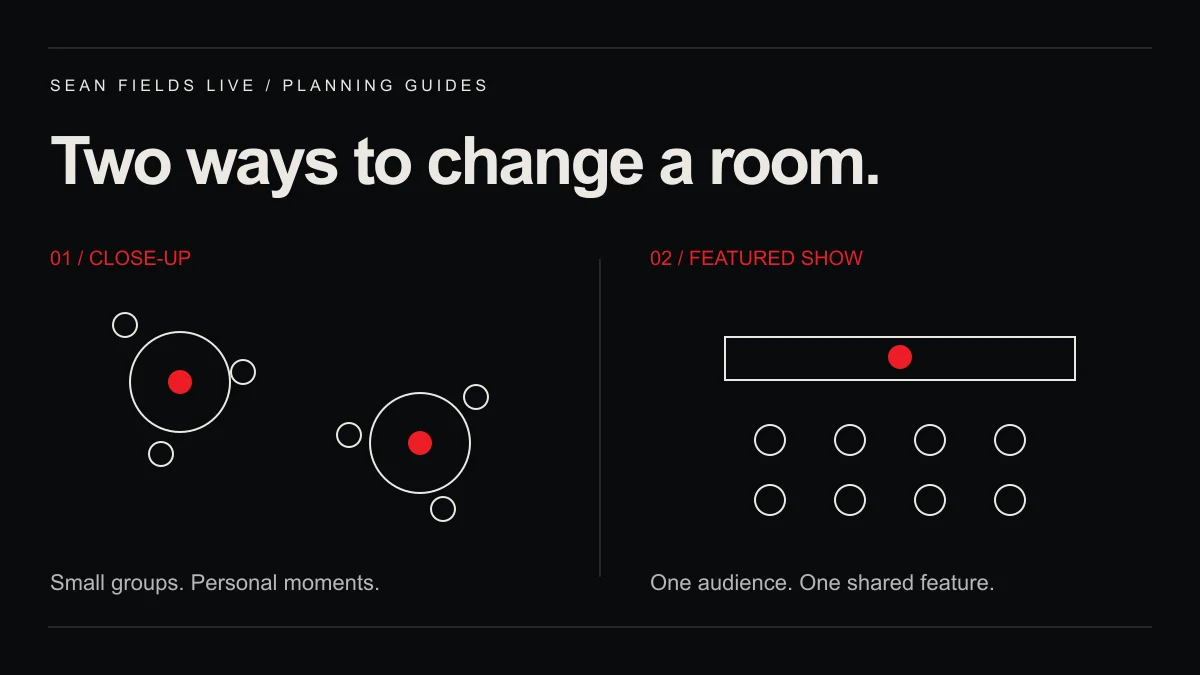
Choose close-up magic when guests are moving and socializing; consider a featured show when everyone can watch together. A hybrid can do both. The best choice depends on guest flow, sightlines, noise and the schedule—not headcount alone.
One question first: should guests move, or watch together?
Close-up magic brings the performance to small groups. A stage or featured show brings the audience’s attention to one shared experience. Neither is automatically better; they solve different event-planning problems.
A Winnipeg magician and mentalist can help translate the event brief into a format. For Sean Fields, the published options include an interactive stage experience, close-up encounters and a hybrid event experience.
Think about what guests will be doing when entertainment begins. Arriving, finding a drink and meeting colleagues creates a different setting from being seated after dinner with the room’s attention available.
Compare the formats at a glance
Use the comparison as a starting point, then confirm the practical plan with the performer and venue.
| Planning question | Close-up magic | Featured stage show |
|---|---|---|
| How do guests experience it? | In small groups near the performer | As one audience watching a shared feature |
| Where can it fit? | Arrivals, cocktails or a reception | A defined slot in a dinner, conference or celebration |
| What does the room need? | Space for groups and manageable noise | Clear sightlines, attention and suitable sound/lighting |
| What should be coordinated? | Guest flow and coverage period | Introductions, service, speeches and production cues |
| What is the main tradeoff? | Guests experience different moments at different times | Other activities may need to pause for the feature |
Choose close-up when interaction belongs inside the reception
Close-up works as a conversation point rather than a separate agenda item. It can introduce a shared moment among people who have just met or give a small group something unexpected to react to.
It still needs planning. Loud music, crowded queues or guests continuously moving elsewhere can interrupt an interaction. Tell the performer how arrivals, drinks, photographs and announcements will work so the coverage period is realistic.
Do not assume every guest will see the same routine, or that any number of people can be covered in a fixed period. Confirm expectations using the actual guest count and flow.
Choose a featured show when you want one shared moment
A featured show gives the room a common focus and a defined beginning and ending. It can fit after dinner, inside a conference program or as the central entertainment for a celebration.
“Stage show” does not mean every booking needs the same platform or production package. Visibility and sound depend on the venue and audience arrangement. Confirm requirements rather than renting a stage from the label alone.
Sean’s core interactive stage experience is typically 30–45 minutes, as described on the corporate magic and mentalism page. Final timing and setup should be agreed for the specific event.
When a hybrid is useful
A hybrid uses close-up interaction during one part of the event and a shared show later. It is worth discussing when you want both reception energy and a featured moment for the whole audience.
The benefit comes with more coordination: two time blocks, potentially different room arrangements and a gap between them. Tell the performer about dinner, speeches and any room change so the proposal describes the full commitment.
For the budgeting implications, read what shapes a magician’s quote. A hybrid should be compared with other proposals covering the same scope.
Three ways to apply the decision
These are hypothetical examples to help you brief the event, not claims about Sean’s past clients.
A client networking reception
If guests are circulating and conversations are the purpose, close-up may fit naturally. Check noise and the guest-flow plan rather than inserting a feature that stops the reception without warning.
A seated company celebration
If everyone is already gathered after dinner, a shared feature may give the program a clear focal point. Keep meal service, awards and speeches from competing with the performance.
A small private gathering
A smaller group does not automatically mean roaming magic. An intimate shared performance may suit the occasion. Explain the room and atmosphere and ask what format makes sense.
Send the layout and schedule before settling on a label
Start with the venue, guest estimate, seated or standing arrangement, and a rough timeline. Add the atmosphere you want: easy conversation, a surprising shared feature, or both.
The questions-to-ask checklist helps turn that choice into a practical booking brief. If you need a recommendation, share your event details rather than guessing which format the room requires.
A few more useful answers.
Can mentalism be performed close-up?
Mentalism describes the style of experience rather than a single room format. Discuss whether close-up, a shared feature or a combination is appropriate for the material and your event.
Is a stage show only for large audiences?
No. A focused shared performance can suit an intimate group as well. The room, visibility, material and desired atmosphere matter alongside audience size.
Can close-up magic happen during a meal?
Discuss the service plan first. Food delivery, table access and conversations may affect the experience; a reception or a defined pause may be more practical for your event.
Can we change the format after the initial inquiry?
Raise the change as soon as possible. A different format can affect timing, production and scope, so confirm the revised plan and proposal before the event.
Sean Fields
Sean Fields is a Winnipeg-born magician, mentalist, magic creator and consultant with more than two decades of experience. His work spans close-up magic, corporate stages and creative consulting for television productions. These guides help organizers plan the setting, timing and guest experience for live entertainment.
More about Sean Fields