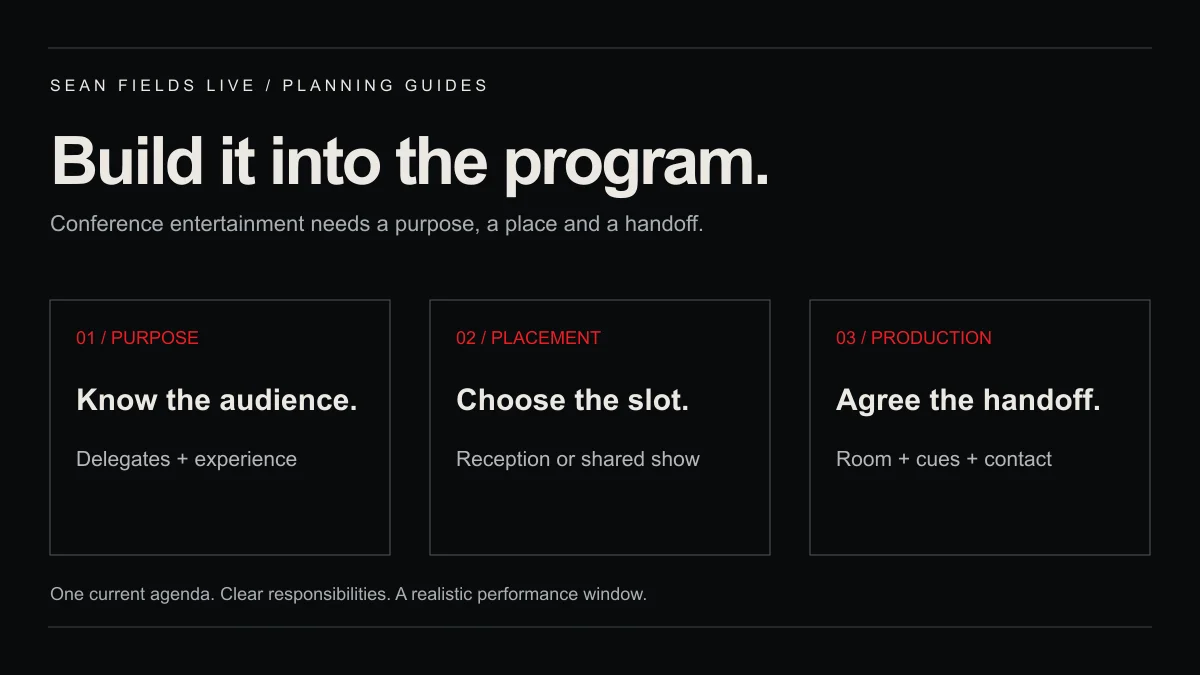
Decide whether entertainment belongs in a networking reception, a seated conference feature or an evening social event. Brief the performer on the audience and full agenda, then confirm room access, technical responsibilities and a realistic performance window. Do not assume a session gap is automatically a suitable show slot.
Define the role of entertainment in the conference
A conference has competing demands on delegates’ attention: sessions, scheduled breaks, professional conversations and sometimes an evening function. Entertainment needs a clear purpose within that program.
When choosing a magician for a Winnipeg corporate event, explain whether the brief is for small-group reception interaction or a shared feature. Do not assume a general booking also includes facilitation, emceeing, a keynote or custom business messaging; discuss any additional role explicitly.
Sean Fields offers corporate magic and mentalism through close-up, stage and hybrid formats. The useful starting point is the delegate experience you want, followed by an appropriate slot and production plan.
Choose the placement before assigning a duration
| Possible placement | Audience situation | What to establish |
|---|---|---|
| Networking reception | Delegates circulate and talk in groups | Guest flow, coverage and announcement timing |
| Shared feature in a seated program | The room is expected to focus together | Actual performance time, sightlines and technical cues |
| Conference dinner or social event | Guests shift from sessions into an evening program | Travel between rooms, service and the host’s introduction |
A break may already be needed for refreshments, movement or professional conversations. A performance that requires attention should not silently replace a promised break. Explain the agenda as delegates will experience it.
The show-scheduling guide helps place entertainment alongside meals, speeches and closing remarks.
Identify the exact room and audience arrangement
Large facilities can offer very different meeting, reception and banquet spaces. The RBC Convention Centre Winnipeg meetings and conferences information, for example, describes several types of rooms and arrangements. Use the venue’s current information when briefing your event rather than treating the facility name as a complete setup description.
Share the booked room, attendance estimate, seating style, performance position and any room change before or after the slot. Ask how guests at the back and sides will see and hear the feature.
A venue reference is planning context, not a claim of a partnership or previous performance. Confirm the specific configuration with your venue contact and performer.
Treat the speaker-to-show handoff as its own task
A conference stage may already be configured for slides, a lectern and several speakers. Do not assume that arrangement automatically suits the entertainment.
- Who confirms the performance area and any changes from the preceding session?
- Who supplies and operates the agreed sound or lighting?
- When can checks happen without interrupting delegates?
- Who introduces the performer and signals the start?
- Who returns the room to the next program item?
Give the production team a clear point of contact and an agreed handoff plan. Equipment and access requirements should come from the specific performance brief, not a generic list copied from another event.
The venue requirements checklist covers the room and equipment questions in more detail.
Describe the audience without making assumptions
Explain who is attending, whether guests know one another and the tone of the conference. Mention relevant language, hearing, visibility or access considerations in practical terms, sharing only information needed to arrange the experience.
If you expect an online audience as well, ask whether and how the proposed performance can serve them. A live room booking should not be assumed to include remote interaction, broadcast rights or recording permission.
Likewise, agree on photography, filming or material use before the event. The organizer’s media plan and the performer’s agreement need to describe the same activity.
A conference brief that makes the recommendation easier
Consider this hypothetical brief: “Delegates finish afternoon sessions in a meeting room, then move to a reception before an evening dinner. We are considering close-up interaction at the reception or a shared feature after the meal.”
To turn that into a useful inquiry, add the actual date, rooms, guest estimate, agenda, technical contact and desired outcome. If the choice is still open, the format comparison helps frame the tradeoff.
Before confirming, identify a realistic performance window and what happens if a speaker overruns. Do not assume entertainment can be shortened, moved or extended without consulting the performer.
Keep one current plan across the event team
Send the same approved agenda and production details to the organizer, venue, host and performer. Identify who can approve a change on event day and how they will communicate it.
Review any change to the room, guest count, format or media plan before the conference. A recommendation made for one arrangement may need adjustment when that arrangement changes.
Use the booking questions checklist to check the final proposal. The aim is an entertainment feature with a clear place in the conference, not an extra activity competing with everything else.
A few more useful answers.
Can entertainment be placed in a conference break?
First establish what delegates need from the break and whether the proposed format fits. A shared feature requires different attention and arrangements from optional reception interaction.
Does a conference booking include an emcee or keynote?
Do not assume additional roles are included. Ask about the specific service and scope you need, and confirm any agreed responsibilities in the proposal.
Can we stream or record the performance?
Discuss the media plan before booking and confirm permission, scope and technical requirements. A live performance agreement should not be treated as automatic permission to record or broadcast.
What if the session before the performance overruns?
Agree on the performance window and a communication route in advance. The event-day decision-maker should coordinate changes with the performer, venue and host.

Sean Fields
Sean Fields is a Winnipeg-born magician, mentalist, magic creator and consultant with more than two decades of experience. His work spans close-up magic, corporate stages and creative consulting for television productions. These guides help organizers plan the setting, timing and guest experience for live entertainment.
More about Sean Fields