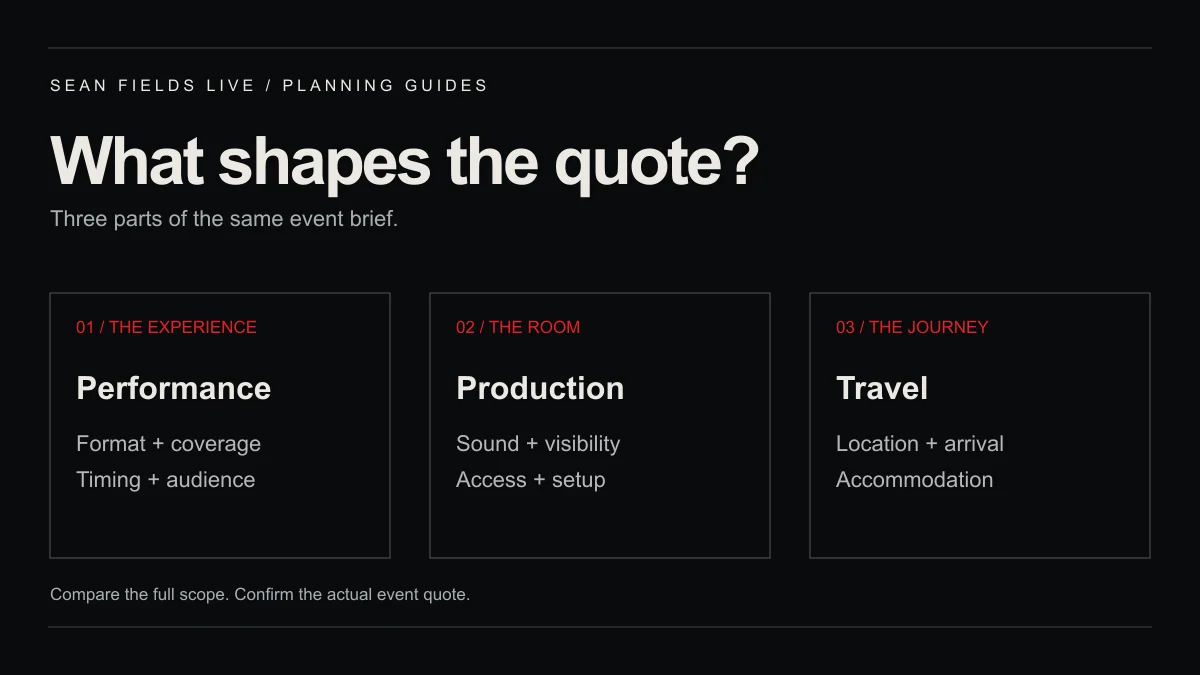
There is no single useful price for every Winnipeg magic booking. Compare the performance format, event schedule, production responsibilities and travel—not just the number of minutes on stage. Sean Fields provides a quote after reviewing your event details.
Start with the experience, then compare the price
A cocktail reception with guests moving between conversations needs a different plan from an after-dinner show watched by the whole room. Both might occupy the same amount of time, but the audience experience, preparation and technical setup are different.
When hiring a Winnipeg magician, compare quotes for the same job: the date, location, guest count, performance format and place in the program. A price without those details can leave important assumptions unresolved.
This guide explains what to include in a brief and what to ask about a proposal. It does not present a market-wide average or a fixed Sean Fields rate: the right figure comes from a quote for your event.
The details that shape an entertainment quote
Performance format and coverage
Close-up magic happens among small groups, while a featured show asks everyone to watch together. A hybrid combines both. The scope changes again if you need more than one reception block or a performance separated from the arrival period by dinner and speeches.
Audience and room
Headcount helps define coverage, but the room matters too. A long banquet room, a standing reception and a private dining room create different visibility and sound needs. Send the room name and layout if you have them; the venue name alone may not identify the space.
Time committed to the event
State the arrival window, expected performance time and finish time. Ask how the proposal handles a delayed dinner, an extended program or a substantial change in scope. Do not assume an extra performance block or an open-ended wait is included.
Travel and production
Winnipeg and out-of-city bookings can involve different travel arrangements. For Manitoba events farther away, confirm transportation, accommodation if needed, and arrival margin. For any venue, establish who supplies sound, lighting and staging before comparing totals.
Compare the scope of three common formats
Use this table to ask better questions. It describes planning differences, not a price ranking.
| Format | What you are planning | Clarify in the quote |
|---|---|---|
| Close-up | Interaction with small groups during arrivals, cocktails or networking | Coverage period, guest flow and whether the room suits conversation |
| Featured show | One shared performance with a clear start and finish | Show length, audience placement and technical responsibilities |
| Hybrid | Close-up interaction plus a feature later in the event | Both time blocks, the gap between them and setup changes |
If the choice is still open, read the close-up versus stage magic comparison before requesting a format. A performer can also recommend one from the brief.
Ask what is included before you compare totals
- The performance format, number of blocks and agreed duration.
- Arrival, setup and access arrangements.
- Sound, microphone, lighting and stage responsibilities, where applicable.
- Travel and accommodation arrangements for out-of-city work.
- Whether applicable taxes are included in the total.
- Payment milestones and the process for date, timing or scope changes.
These are questions to resolve, not a list of items automatically included in Sean’s proposal. Keep the final agreement clear enough that you, the venue and the performer can work from the same plan.
Three example briefs that make quotes easier to compare
The following are hypothetical planning examples, not past bookings or quoted packages.
A downtown client reception
“We have a standing reception in a private room, approximately 60 adult guests, and want interaction during the arrival hour. The venue will continue serving drinks.” This points the conversation toward small-group coverage and noise levels.
A company dinner
“We expect 150 seated guests, with dinner followed by awards. We want a shared feature between the awards and the final speeches.” Add the room layout, proposed show slot and available sound so the production assumptions are visible.
An event outside Winnipeg
“Our Manitoba venue is outside the city and access starts in the afternoon. We are considering cocktails plus an evening show.” Include the exact location and finish time so travel and the full event commitment can be assessed.
Send the details you know—even if the plan is unfinished
You do not need a finished seating chart to start. Share the date, venue and city, approximate attendance, event type and the experience you want guests to have. Mark uncertain details as estimates rather than leaving them out.
For a corporate event, the corporate performance options explain the available formats. Before confirming any entertainer, use the booking questions checklist to make sure the proposal answers your practical concerns.
A few more useful answers.
Does a shorter show always cost less?
Not necessarily. The fee can reflect preparation, travel, setup and the overall event commitment as well as performance time. Ask about the scope rather than assuming a per-minute rate.
Can I request a quote before choosing a venue?
Yes. Share the city, date, guest estimate and type of event, and explain that the venue is undecided. The format and production plan may need confirmation once the room is selected.
Are travel and taxes included?
Confirm both in the written proposal. Do not assume that an advertised amount or a quote for another event includes the same travel, production or applicable taxes.
What if my guest count changes?
Tell the performer before the event so coverage, visibility and sound can be reviewed. Ask whether a significant change affects the agreed format or quote.
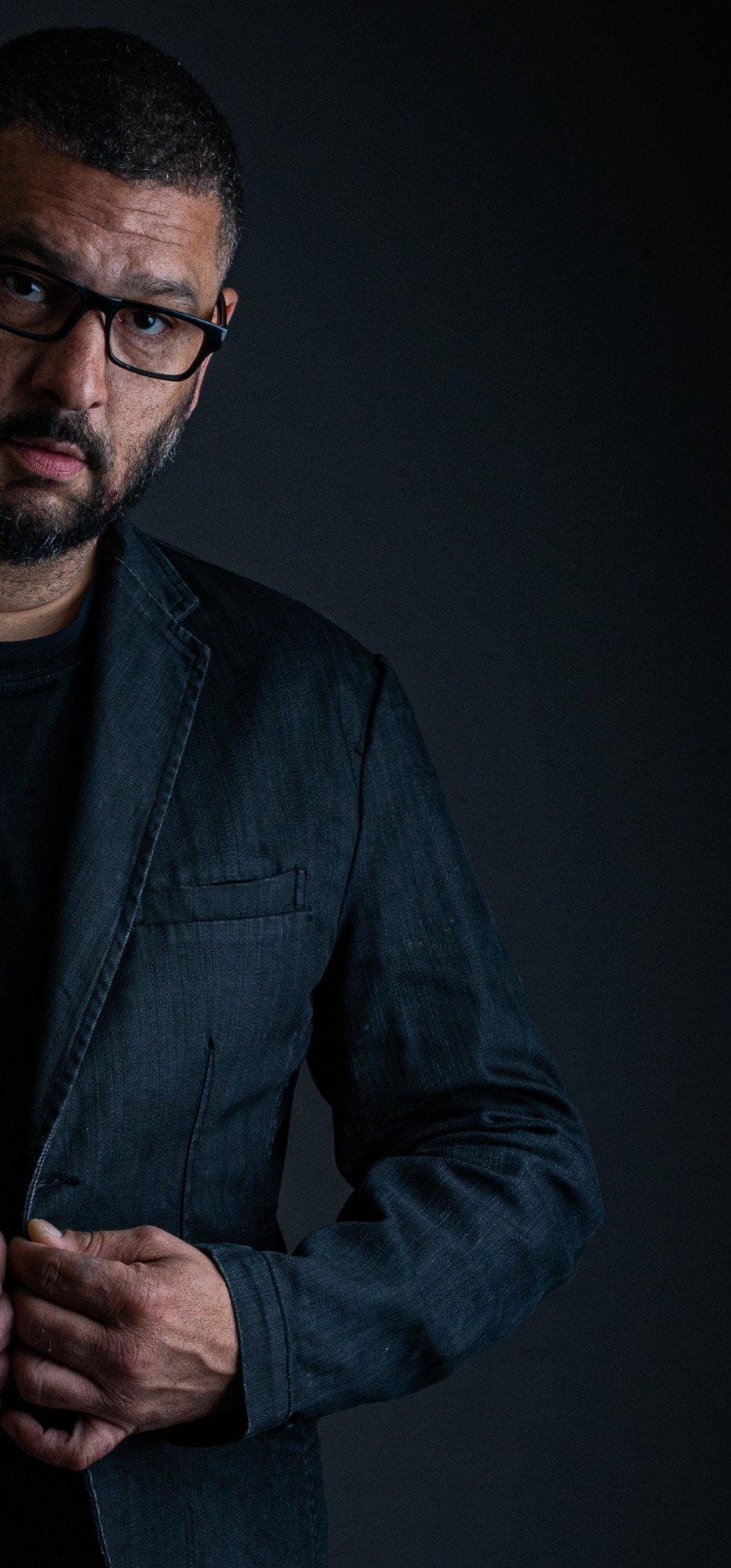
Sean Fields
Sean Fields is a Winnipeg-born magician, mentalist, magic creator and consultant with more than two decades of experience. His work spans close-up magic, corporate stages and creative consulting for television productions. These guides help organizers plan the setting, timing and guest experience for live entertainment.
More about Sean Fields