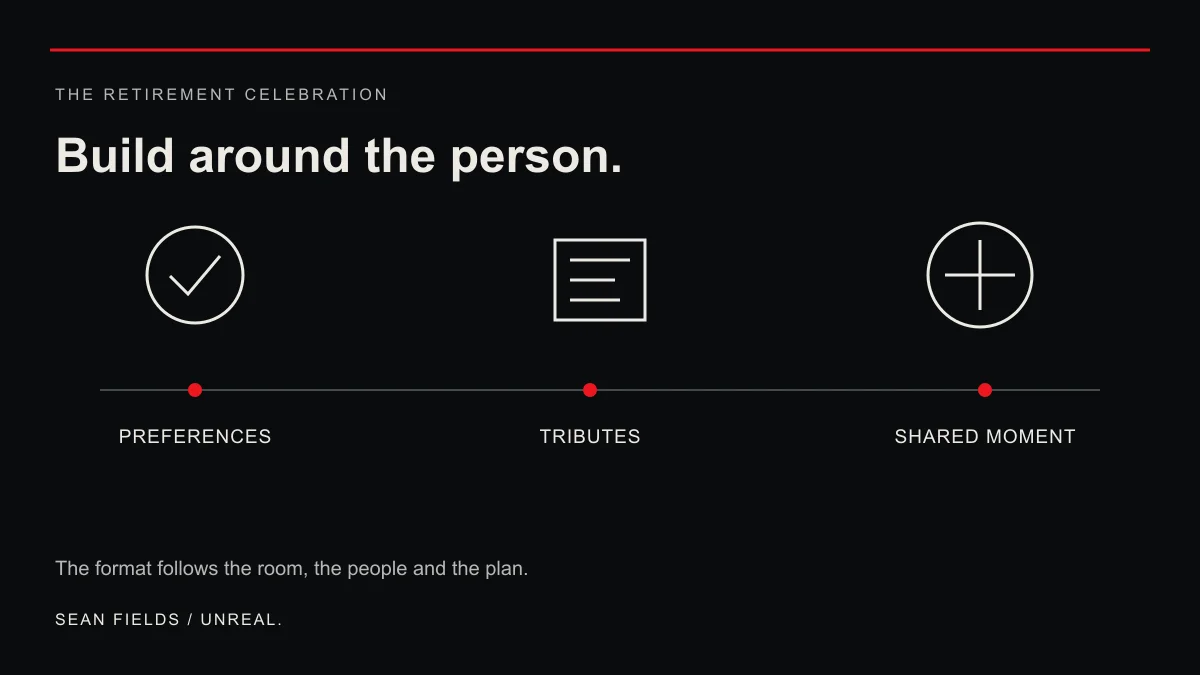
Build a retirement celebration around the guest of honour’s preferences. Decide whether magic should happen among small groups or as a shared feature, then coordinate it with tributes, food service and gifts. Agree on participation beforehand, especially when the entertainment is a surprise, and give one host responsibility for the running order.
Start with the person, not a surprise reveal
A retirement gathering can mix colleagues, family and friends who know different parts of the guest of honour’s life. Before choosing entertainment, ask what kind of celebration the person would enjoy: informal conversation, a shared show, brief recognition or a more structured dinner.
When discussing the occasion with a magician in Winnipeg, describe the preferred atmosphere and participation boundaries. Being the reason for the party does not mean the retiree wants to be on stage or the subject of improvised jokes.
Sean’s private-party entertainment options are a useful starting point for family-hosted celebrations. If an employer is organizing the event, also explain the workplace program and who is responsible for approvals and payment.
Match the format to the way people will gather
Think about audience attention rather than age or job title. The following examples show planning choices, not claims about past bookings.
| Gathering | Format to discuss | Host responsibility |
|---|---|---|
| Open-house reception | Small-group close-up interaction | Explain staggered arrivals and keep walkways clear |
| Seated retirement dinner | A shared feature in a defined break | Coordinate service, speeches and the introduction |
| Private home celebration | An intimate shared show or circulating format | Provide the real layout and describe interruptions |
A group of thirty spread between a kitchen, patio and living room can be harder to gather than a larger seated audience. Share the space and how people will use it. For a home event, the house-party guide covers furniture, access and interruptions.
Give tributes and the show separate moments
List everything the hosts want to include: a welcome, meal, colleague remarks, a photo presentation, gifts and a response from the retiree. Decide which moments matter most before adding entertainment. An informal party can still benefit from one short running order.
A possible sequence is welcome, meal, tributes, a clear introduction to the performance, then relaxed conversation. Another event may put close-up interaction before dinner. Choose with the venue and performer rather than borrowing a fixed timeline.
Ask speakers for a realistic duration and name the person who handles a late-running program. Keep the performer informed when the room is ready. The show scheduling guide explains why a protected attention window is more useful than an optimistic gap.
Brief the surprise without inventing the person’s consent
You can keep the entertainment a surprise while still giving the performer clear boundaries. Tell the organizer privately whether the retiree enjoys public participation, prefers to watch, or would appreciate a brief acknowledgement without a central role.
Do not provide sensitive workplace stories or expect a performer to turn a colleague’s personal history into a joke. If a name, message or commemorative item is important, ask how it can be handled and confirm any customization before promising it to other hosts.
For guests with access needs, discuss seating, sound and movement with the venue and performer. Avoid assuming a retirement audience has one set of preferences or abilities. The details of the actual guests are more useful than stereotypes.
Confirm the booked room and its working layout
A restaurant’s private dining area, a company meeting space and a home all create different conditions. Confirm whether your space is exclusive, what other activity can be heard and when food service needs access. Ask before moving furniture or bringing equipment.
For local venue research, the Fort Garry Hotel publishes private dining information for gatherings. Contact the venue about the specific room and entertainment permissions. Naming it here does not imply a previous performance, endorsement or automatic suitability.
Send a room photo or floorplan with the proposed guest arrangement. The production checklist helps identify sightlines, sound, access and which responsibilities need agreement.
Put one host in charge of the final plan
- Event date, location, room and audience estimate.
- Whether family, friends, colleagues or a combination will attend.
- The retiree’s preferred participation and any surprise arrangements.
- Food service, speeches, gifts and the proposed performance slot.
- Room access, seating, sound and the venue contact.
- One decision-maker for changes on the day.
Keep the proposal clear about the performance, any waiting period and requested tailoring. The quote-planning guide explains why the whole commitment matters. When the outline is ready, send the party brief so the recommendation can fit the occasion and the guest of honour.
A few more useful answers.
Can the entertainment be a surprise?
Discuss that with the performer and the host responsible for the running order. Confirm access, the introduction and the guest of honour’s participation boundaries while keeping the reveal discreet.
Does the retiree have to take part?
Do not assume so. Explain their preferences before booking and agree on whether they will watch, receive a brief acknowledgement or be invited into a particular moment.
Can we include colleagues and family in one audience?
Describe the actual guest mix, room and atmosphere. The format should suit the whole gathering rather than rely on workplace references that some guests will not understand.
Can magic happen in a restaurant private room?
Ask the venue about entertainment permission, service access, sound and the actual room layout. Then share those details with the performer to assess a suitable format and time.

Sean Fields
Sean Fields is a Winnipeg-born magician, mentalist, magic creator and consultant with more than two decades of experience. His work spans close-up magic, corporate stages and creative consulting for television productions. These guides help organizers plan the setting, timing and guest experience for live entertainment.
More about Sean Fields