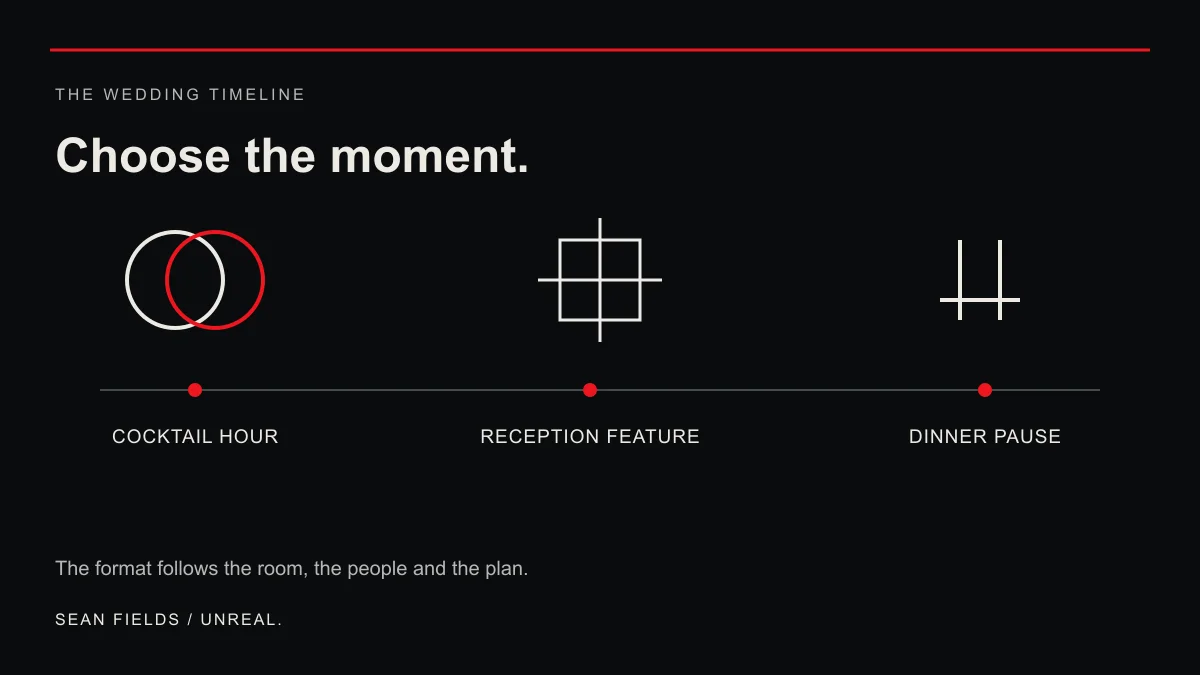
Choose the entertainment slot around guest attention and the catering plan. Close-up magic can suit a circulating cocktail reception; a shared show needs a clear pause in the program. Between-course entertainment should only be planned with the caterer’s agreement. Confirm the room, audience and full timeline before committing to a format.
Start with the part of the day your guests will experience
Your photography schedule and your guests’ schedule may look different. While the wedding party is elsewhere, some guests may be meeting for the first time; later, the same group may be seated and ready for a shared moment. Entertainment works best when its role is clear.
When considering a Winnipeg magician for wedding celebrations, describe the transition you want to improve. Is the aim to give guests something to enjoy during photographs, bring two families into conversation, or create one feature everyone watches together?
A useful inquiry starts with the ceremony finish, reception access, meal service and speeches. For performance options and a booking inquiry, explore Sean’s wedding magic service. The recommendation should follow the actual day rather than a package label.
Compare three possible placements
Use this comparison to identify the questions for your coordinator and performer. It is a planning framework, not a fixed wedding schedule.
| Placement | Useful when | Resolve first |
|---|---|---|
| Cocktail hour | Guests circulate while the wedding party takes photographs | Arrival patterns, noise, service routes and access to groups |
| Reception feature | You want one experience for the gathered room | Announcements, sightlines, sound and a clear service pause |
| Between courses | The caterer can confirm a genuine, predictable break | Plate clearing, kitchen timing and what happens if dinner runs late |
If the distinction is still unclear, the close-up versus stage guide explains how circulating entertainment differs from a focused show. A small wedding can still suit a shared feature; a large wedding does not automatically require one.
For cocktail hour, plan the guest flow
Give the performer a picture of how guests arrive and where they gather. A lounge, terrace and adjoining foyer can split the audience into separate spaces. The total guest count alone will not show how much small-group coverage is practical.
Keep access to drinks, canapés and seating straightforward. Explain whether background music, another act or announcements will happen at the same time. The coordinator should know when the close-up period ends and when guests move to dinner.
For an outdoor wedding reception near Winnipeg, Lower Fort Garry is one example of a property with official wedding and rental information. Check the booked space and current venue conditions directly. A venue reference is planning context, not a claim that Sean has performed there. Review the outdoor-show checklist before assuming an outdoor concept is suitable.
For a reception feature, protect one clear moment
A shared performance needs more than an empty line in the running order. Guests should know the show is beginning, be able to see and hear, and have a reason to focus together. Coordinate the introduction with the person making announcements.
Discuss the relationship to speeches, cake cutting, the first dance and the band or DJ. Avoid announcing two activities at once. If the room changes from dinner seating to a dance floor, establish whether the show happens before or after that change and what view the guests will have.
The couple should also decide how visible they want to be during the performance. Tell the performer about preferred participation and any moments reserved for the photographer; do not assume the newlyweds must become the centre of every interaction.
Treat between-course magic as a catering decision too
A planned pause can disappear when the kitchen is ready early, a speech overruns or plates need clearing. Ask the catering lead whether a performance window is realistic, which person can release the room and what service must finish first.
For table-level interaction, explain the table layout and access rather than assuming every table can be visited during dinner. Servers need working routes, and guests need time to eat and converse. Confirm what coverage the agreed duration can reasonably provide.
Keep one updated running order with a named contact who can make decisions on the day. If the meal timing changes, the response should be an agreed adjustment, not competing instructions from the couple, venue and entertainer.
Send one wedding entertainment brief
- Date, venue, exact spaces and approximate guest count.
- Ceremony finish, photographs, meal service and key reception moments.
- Preferred format and the purpose of the performance.
- Coordinator, catering and announcement contacts.
- Audience layout, sound provision and indoor backup where needed.
- The couple’s participation preferences and any room changes.
Before requesting a quote, use the entertainment cost guide to compare scope, coverage and production responsibilities. A cocktail-hour booking and a cocktail-plus-reception booking describe different commitments. Share the outline you have through the booking form, even if the final running order is still being developed.
A few more useful answers.
Can we have magic while the wedding party takes photographs?
That is a possible cocktail-hour placement. Share where the remaining guests will gather, when they arrive and how service works so the format and coverage can be assessed.
Does every wedding need a stage?
No. Requirements depend on the proposed experience, audience and room. A close-up reception and a shared show have different visibility and sound needs; confirm them before hiring equipment.
Should magic happen during speeches?
Schedule the two separately so neither competes for attention. Agree on an introduction, a clear performance window and the handoff to the next part of the reception.
Can the wedding booking include close-up magic and a shared show?
A combined format can be discussed. Include both time blocks, any waiting period, room changes and production needs so the proposal covers the whole commitment.

Sean Fields
Sean Fields is a Winnipeg-born magician, mentalist, magic creator and consultant with more than two decades of experience. His work spans close-up magic, corporate stages and creative consulting for television productions. These guides help organizers plan the setting, timing and guest experience for live entertainment.
More about Sean Fields